
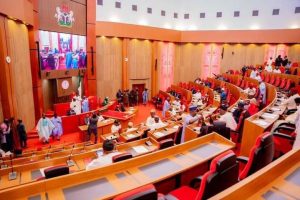
ABUJA – The Nigerian Senate has taken a significant step toward creating a comprehensive national framework for Autism Spectrum Disorder (ASD), advancing a bill to establish a National Centre for Autism and six zonal centres dedicated to research, diagnosis, and care.
The proposed legislation, which passed its second reading on Thursday, aims to institutionalise early detection and intervention for both children and adults with autism. It also seeks to promote nationwide awareness, professional training, and social inclusion.
Sponsored by Senator Natasha Akpoti-Uduaghan (Kogi Central), the bill directly addresses the current vacuum in public health policy for neurodevelopmental conditions in Nigeria.
Addressing a Critical Gap
Leading the debate, Senator Akpoti-Uduaghan described the initiative as “long overdue” and critical to Nigeria’s public health. She highlighted the harsh realities faced by individuals with autism and their families, who are often left “to navigate this challenge alone.”
Citing data from the World Health Organisation (WHO) that 1 in 100 children globally is diagnosed with autism, the senator warned that Nigeria’s prevalence is likely “far higher” due to a lack of awareness and limited diagnostic capacity.
“Many children with autism are mislabeled as stubborn, mentally ill, or possessed — leading to rejection, abuse, and lifelong exclusion,” Akpoti-Uduaghan stated. She noted that teachers are often ill-equipped, hospitals lack diagnostic tools, and families face “enormous emotional and financial strain.”
The current system, she argued, relies on “poorly equipped private facilities or seeking help abroad,” an option available only to the privileged.
A New National Framework
The “Act to Establish the National Centre for Autism” proposes a coordinated federal response:
- National Headquarters: The main National Centre for Autism will be situated in Abuja to coordinate high-level research, training, and policy development.
- Six Zonal Centres: To ensure equitable access, six zonal centres will be established in:
- Kaduna (North West)
- Bauchi (North East)
- Enugu (South East)
- Port Harcourt (South South)
- Ibadan (South West)
- Abuja (North Central)
These centres will be responsible for providing direct diagnostic, therapeutic, and educational services. They will also serve as referral hubs for state-level facilities and lead community-based awareness campaigns to combat stigma.
Describing the bill as “an act of social justice, empathy, and national foresight,” Senator Akpoti-Uduaghan urged her colleagues to support it. “It represents our collective recognition that every Nigerian life matters, regardless of neurological or developmental differences… It is a call to give children with autism a chance to thrive, learn, and contribute to our great nation.”
Next Steps
The bill received widespread commendation from senators across party lines.
Senate President Godswill Akpabio has referred the legislation to the Senate Committee on Health (Secondary and Tertiary) for further legislative work. The committee is tasked with engaging stakeholders to ensure the final framework “reflects Nigeria’s realities.”
If passed into law, this will be Nigeria’s first comprehensive federal legislation dedicated to autism diagnosis, care, and inclusion.
Share On:
CLICK HERE TO PROMOTE YOUR MUSIC/VIDEO