
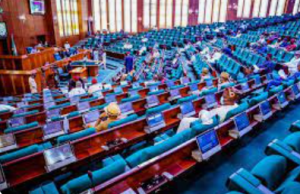
The Nigerian House of Representatives is currently reviewing a legislative proposal designed to foster sustainable progress in rural areas, alleviate poverty, and boost the economic well-being of residents in farming communities.
* The Legislation: The proposed law, titled “The National Integrated Rural Development Bill, 2025,” is intended to cover all rural regions across the country, as defined by relevant economic and demographic standards.
* Sponsorship and Progress: Sponsored by Marcus Onobun (representing Esan Central/Esan West/Igueben Federal Constituency, Edo State), the bill is awaiting its second reading in the Green Chamber.
💰 Key Provisions of the Proposed Bill
An exclusive copy of the bill obtained by Sunday PUNCH reveals specific provisions aimed at economic empowerment:
* Guaranteed Employment: The bill seeks to ensure that every rural household whose adult members volunteer for unskilled manual labor on local development projects will be guaranteed a minimum of 100 days of paid work per fiscal year.
* Proposed Wage: Section 12(2) stipulates that every employed adult in these households would be entitled to a daily wage of N3,500 for each day of work.
* Gender Quota: One-third of these employment opportunities would be reserved for women in rural communities.
🎯 Objectives and New Agency
The key aims of the legislation include reducing poverty, improving living standards, boosting agricultural output to ensure food security, promoting community involvement in planning, and facilitating better access to education, healthcare, and social services in rural areas.
* New Institution: The bill also proposes the creation of the National Integrated Rural Development Agency, which would be tasked with overseeing implementation, coordinating stakeholders, monitoring projects, and advancing technology adoption in rural initiatives.
* Financial Benefit: Crucially, the bill proposes that revenues generated by this new agency “Shall be exempted from income tax,” and all financial contributions made to its fund would be tax-deductible.
🌍 Addressing Deep-Seated Rural Deprivation
Sponsor Marcus Onobun highlighted that the bill’s importance lies in establishing a legal and institutional framework for coordinated, sustainable rural development to reduce poverty and enhance infrastructure.
* The Problem: Despite Nigeria’s vast natural wealth, the nation continues to struggle with widespread rural poverty and underdevelopment—a persistent national socio-economic challenge.
* The Scope: With a population estimated at around 200 million, nearly half of all Nigerians reside in rural regions, where poverty levels significantly exceed those in urban centers. While major cities have rapidly expanded, rural communities remain stuck in a cycle of limited infrastructure and low productivity.
* Historical Context: The roots of this issue are traced back to the colonial era, which favored investment in coastal and administrative cities. Post-independence governments perpetuated this trend by focusing on urban industrialization. Today, the rural economy relies on agriculture, but most farmers operate at a subsistence level, increasing their vulnerability to climate change.
* Poverty Data: Data from 2024 indicates that approximately 63% of Nigerians (or 133 million people) are multidimensionally poor, with the highest concentrations of deprivation found in the northern and Middle Belt regions, where insecurity compounds infrastructure deficiencies.
Share On:
CLICK HERE TO PROMOTE YOUR MUSIC/VIDEO